Hands-on by design
Labs, models, field observations, calculations, and demonstrations help students experience science as something they do, not only something they read about.
Rochelle Township High School
The RTHS Science Department helps students move from curiosity to evidence. Through biology, chemistry, physics, anatomy, environmental science, and the Hub of Science framework, students build the habits they need for college, careers, and informed decisions beyond the classroom.
Why science at RTHS
Science at RTHS is designed to feel connected: students investigate real questions, use tools and data with increasing independence, and practice explaining conclusions in ways that transfer across courses.
Labs, models, field observations, calculations, and demonstrations help students experience science as something they do, not only something they read about.
Students learn to collect evidence, organize it, question it, graph it, and decide what the evidence can and cannot support.
The department emphasizes the reading, measurement, analysis, and communication habits students need in STEM fields, healthcare, technical careers, and everyday decision making.
From environmental systems to human health and physical science, students connect classroom ideas to Rochelle, the region, and the world they will help shape.
Department promise
RTHS Science asks students to wonder, test, revise, and explain. That shared rhythm makes the department feel coherent even when the content changes from cells to chemical reactions to motion to ecosystems.
Department goals
The department goals turn science class into a four-year progression of habits: students become more precise, more analytical, more articulate, and more confident using evidence.
Students choose appropriate tools and units, understand accuracy and precision, and use measurements to support scientific claims.
Students organize data, identify variables and trends, use graphs and calculations, and evaluate whether results are reasonable.
Students read scientific information, write procedures and lab reports, build evidence-based explanations, and critique claims.
The Hub gives teachers and students common language so skills deepen from freshman foundations to upper-level independence.
Courses connect to ACT-style reasoning, college readiness, technical pathways, healthcare, engineering, environmental work, and informed citizenship.
PLC conversations use shared evidence from different courses to plan support, extension, and continuous improvement.
Courses and pathways
RTHS science begins with foundational biology and physical science pathways, then opens into advanced, AP, health science, life science, and environmental options for juniors and seniors.
Introduction to Biology, Biology, or Honors Biology establish lab habits, vocabulary, and evidence-based thinking.
Applied Natural Science, Natural Science, and Honors Chemistry extend students into systems, matter, energy, and quantitative reasoning.
Students can pursue chemistry, physics, anatomy, environmental science, zoology, Biology II, AP Chemistry, or Honors Physics.
Course dropdown menu
These descriptions are written from the Science Courses document and organized so students and families can compare options without leaving the department page.
Placement is based primarily on High School Placement Test results and junior high teacher recommendations. This course provides students with information and experiences to study living things in the six major kingdoms. Major topics include ecology, the cell, genetics, disease, zoology, human anatomy, and botany. Students focus on biology that is important to people, including the human role in ecosystems and how living things affect us and are affected by us.
Placement is based primarily on High School Placement Tests and junior high teacher recommendation. Students study living things through topics such as ecology, the cell, genetics, disease, zoology, and botany. First semester emphasizes the cellular and molecular level of living things and how traits are acquired and passed on. Second semester focuses on the kingdoms of living things, with labs and activities that help students study organisms in greater detail.
Honors Biology provides students with information and experiences in the study of living things, including ecology, the cell, genetics, disease, zoology, and botany. Students study the cellular and molecular level of organisms, then focus on the kingdoms of living things through labs and activities. This class is rigorous, moves at a brisk pace, and may include additional projects.
This sophomore course helps students better understand the physical universe through practical applications of earth, physical, and environmental science. Course content includes earth science, weather, atmosphere, environmental science, and space science, with physical science topics such as atoms, chemical reactions, and forces of nature integrated throughout. Students learn through readings, audio-visual presentations, teacher lecture, demonstrations, and laboratory experiences.
Natural Science prepares students to further their scientific skills and knowledge for future RTHS coursework. Students experiment, collect meaningful data, and learn to present, critique, and evaluate scientific claims both in class and as consumers of information. The course focuses mainly on physics and chemistry while building skills students can carry into future coursework and real-life experiences.
Students build understanding of Earth systems and how they relate to what happens around us. The course supports STEM skills through measurement, metric work, math and statistics, scientific data interpretation, and graph construction and interpretation. Topics include interactions of living things with their environment, populations, endangered species, and resource conservation, with a special focus on current environmental topics.
Students continue building understanding of Earth systems and how they relate to the world around us. The course reinforces science, math, and technical skills such as measuring, metric work, statistics, data interpretation, and graph construction. Topics include earth systems and resources, land and water use, pollution, global change, energy, and resource consumption, with a special focus on current environmental topics.
Chemistry is a challenging college-prep course for students intending to go to college. Coursework and extensive lab activities develop observation skills, analysis of experimental findings, and understanding of chemistry. Topics include measurement, matter and energy, atomic structure, electron arrangement, mole relationships, the periodic table, bonding, formulas, chemical reactions and equations, gas laws, liquids and solutions, and acid/base chemistry. Algebra is used extensively to connect mathematics to real-world problems.
Honors Chemistry is designed for students intending to study science, technology, engineering, math, or healthcare in college. Coursework and extensive labs emphasize observation, experimental analysis, and chemistry concepts including measurement, matter and energy, atomic structure, electron arrangement, mole relationships, the periodic table, bonding, formulas, reactions, gas laws, liquids and solutions, equilibrium, thermochemistry, and acid/base chemistry. It can serve as a single high school chemistry course or the first year of the two-year AP Chemistry sequence.
AP Chemistry is the equivalent of the first two semesters of college chemistry. It is a challenging, hands-on second course in chemistry for students who have completed Honors Chemistry. Students explore Honors Chemistry topics in more depth, including chemical reactions, thermochemistry, gas laws, acid/base chemistry, and equilibrium, while also studying electrochemistry and chemical kinetics. Independent learning is emphasized through a research project or lab activity designed and performed by the student.
Biology II focuses on the biology of single-celled organisms. Students review cell structure and function, then study microorganisms such as viruses, bacteria, and protozoa. Genetics is also a major topic, including genetic engineering and its impact on society. Students complete an independent research project in which they choose a problem, design and run an experiment, collect data, conduct library research, and draw a conclusion. This course is offered on alternate years.
Anatomy and Physiology is a semester elective for students interested in any health field. Anatomy and Physiology I and II may be taken in any order and do not need to be taken in the same year. Anatomy and Physiology I covers organization, chemistry of life, cells and tissues, integumentary system, skeletal system, muscular system, and nervous system.
Anatomy and Physiology II is a semester elective for students interested in health fields. Anatomy and Physiology I and II may be taken in any order and do not need to be taken in the same year. Anatomy and Physiology II covers overview of organization, endocrine system, blood, circulatory system, lymphatic system, respiratory system, digestive system, urinary system, and reproductive system.
Physics explores the nature of matter and energy and how they relate to each other. Students study motion, energy transfer, forces, electricity and magnetism, waves, sound, optics, fluid dynamics, astrophysics, relativity and modern physics, and basic electric circuits. First semester emphasizes engineering mechanics and hands-on projects such as designing and testing devices. Second semester allows students to select content from a menu of physics options based on yearly student interest, with more projects and labs.
Honors Physics is a lab-intensive course exploring Newtonian equations of motion, force systems, energy, work, momentum, rotational physics, and simple harmonic motion of springs and pendulums. The course uses calculus and is designed to help students perform better in AP Calculus. It is equivalent to the first semester of college physics for science, engineering, math, and pre-med majors.
Zoology is the study of animal life. Students develop a comprehensive producer's management guide for an animal of their choice. Experiences include the study of animal anatomy, physiology, behavior, nutrition, reproduction, health, selection, and marketing. Students also consider perceptions and preferences within local, regional, and world markets. Completing this class is good preparation for the college and/or work environment.
Freshman placement course focused on living systems, lab routines, and foundational science practices.
Core life science course that develops observation, classification, evidence, and communication skills.
Advanced freshman pathway for students ready for accelerated reading, lab analysis, and scientific reasoning.
Practical applications of earth, physical, environmental, weather, atmosphere, and space science concepts.
Earth, physical, and environmental science with algebra-supported problem solving and laboratory experiences.
Rigorous chemistry pathway emphasizing measurement, matter, reactions, algebra, lab work, and STEM preparation.
College-prep chemistry with extensive lab work, measurement, atomic structure, reactions, solutions, and acid-base chemistry.
College-level chemistry sequence with deeper study, independent lab work, and AP exam preparation.
Math-rich study of motion, forces, energy, momentum, rotation, and calculus-supported physics for advanced students.
Semester courses focused on ecosystems, resources, land and water use, pollution, energy, and current environmental topics.
Semester health science courses for students interested in medical, health, or related career fields.
Upper-level life science options that extend students into microorganisms, genetics, animal systems, classification, and research.
Course offerings and placement can change by school year. Students should confirm selections with counselors and current RTHS registration materials. Course descriptions are adapted from the Science Courses PDF provided for this department page.
Start here
The Hub of Science has different value depending on who is viewing it. Students may want expectations, families may want context, teachers may want PLC tools, and administrators may want the department improvement structure.
Students should use the Hub to understand what science skills look like now, what comes next, and why those skills show up in different classes.
Most helpful areas
Families can see that science growth is not only about course content. The Hub names skills students use in labs, college, careers, and everyday decision making.
Most helpful areas
Teachers can use the Hub to connect activities, evidence, and interventions to common department goals, even when courses and units are different.
Most helpful areas
Administrators can see a department-wide structure for skill growth, common assessment language, PLC collaboration, intervention, and extension.
Most helpful areas
Why it exists
Biology, Chemistry, Physics, Anatomy, Environmental Science, and other courses may study very different content. The Hub gives the department common ground by naming the science practices students should improve year after year.
This public site is designed to explain the system and share department resources. It does not include individual student work samples or confidential student information.
Audience dashboards
Each audience needs a different doorway into the same department framework. These dashboards surface the most relevant purpose, starting points, and next actions for each group.
Student lens
The Hub helps students see that science success includes skills that grow across every science class, not only memorized content.
Family lens
The Hub gives families a plain-language view of what students are developing from freshman year through senior year.
Teacher lens
The Hub gives teachers shared language for activity design, rubric feedback, PLC evidence, intervention, and extension.
Administration lens
The Hub organizes vertical alignment, common assessment language, PLC conversations, ACT readiness, and continuous refinement.
Interactive skill explorer
The explorer connects each Hub skill to the student expectation, classroom look, PLC evidence, and ACT readiness connection at each grade band.
Skill
Grade Band
Scientific Measurement
Students build confidence with measuring, estimation, correct units, and appropriate instrument use.
Use common measuring tools, choose sensible units, and make reasoned estimates before and after measuring.
Students measure lab materials, record units clearly, compare estimates to actual values, and discuss sources of error.
Teachers compare student measurement records, unit choices, instrument use, and patterns of common errors.
Students build the habit of noticing what is being measured, which unit is used, and whether data values are reasonable.
The three skills
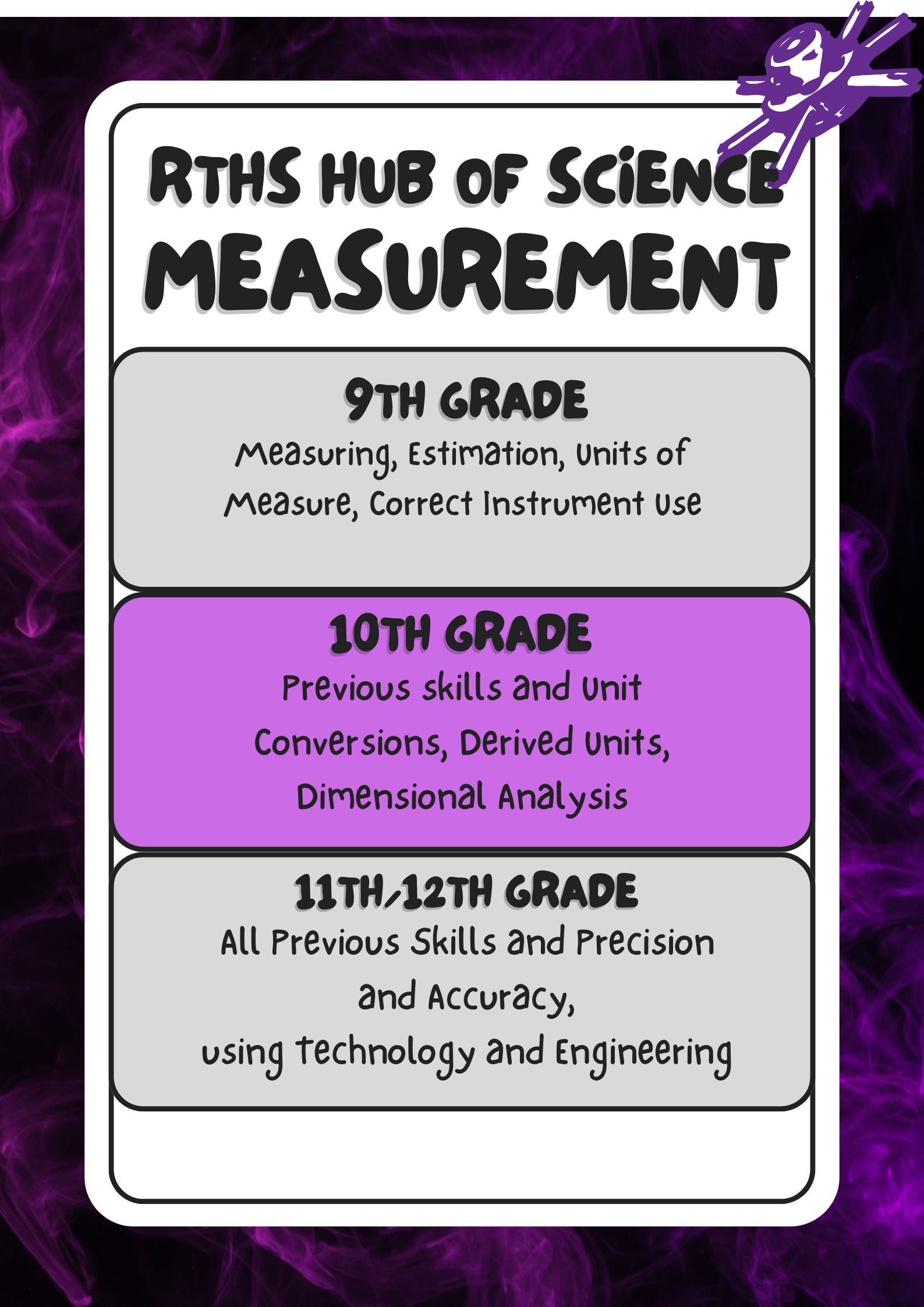
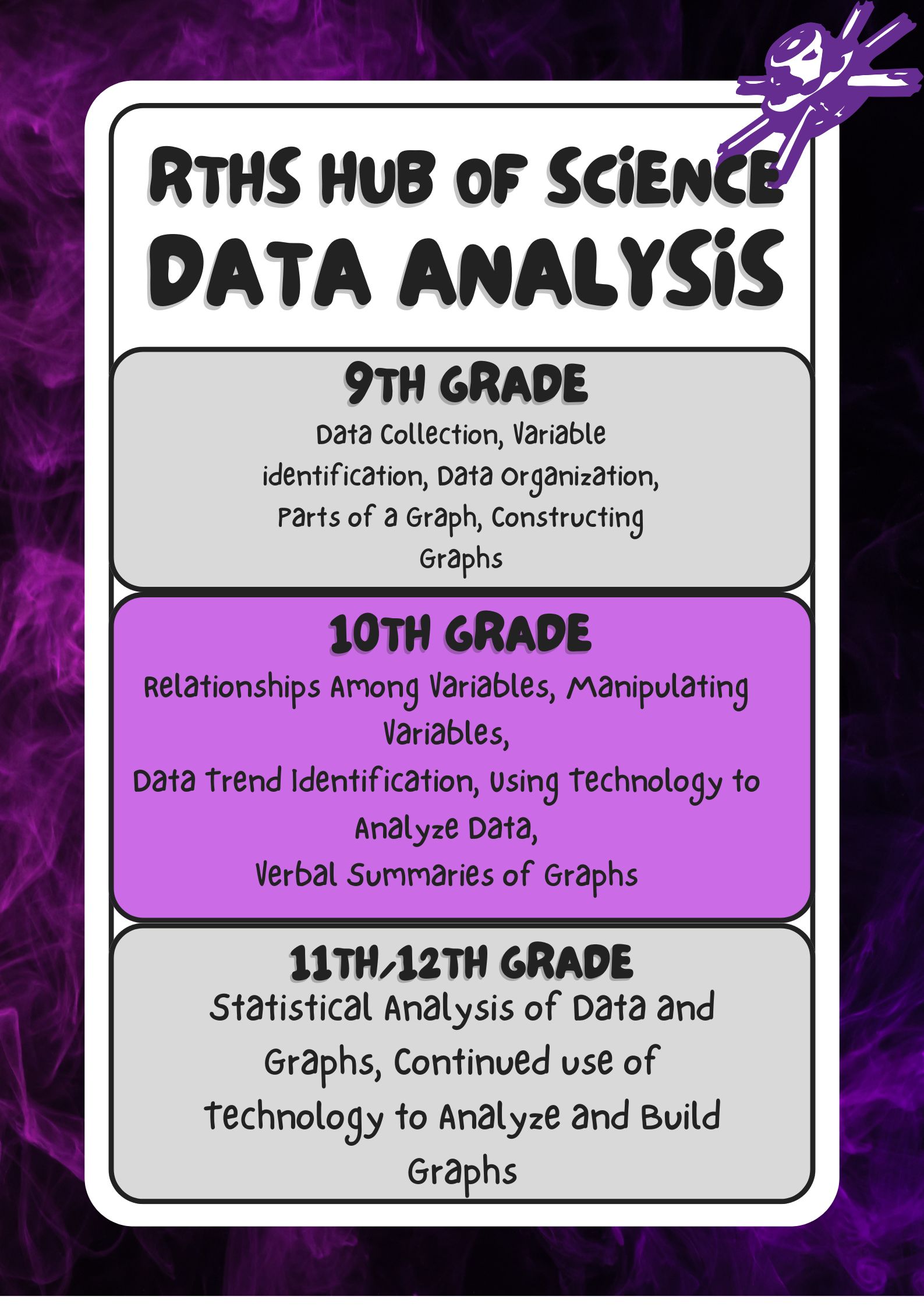
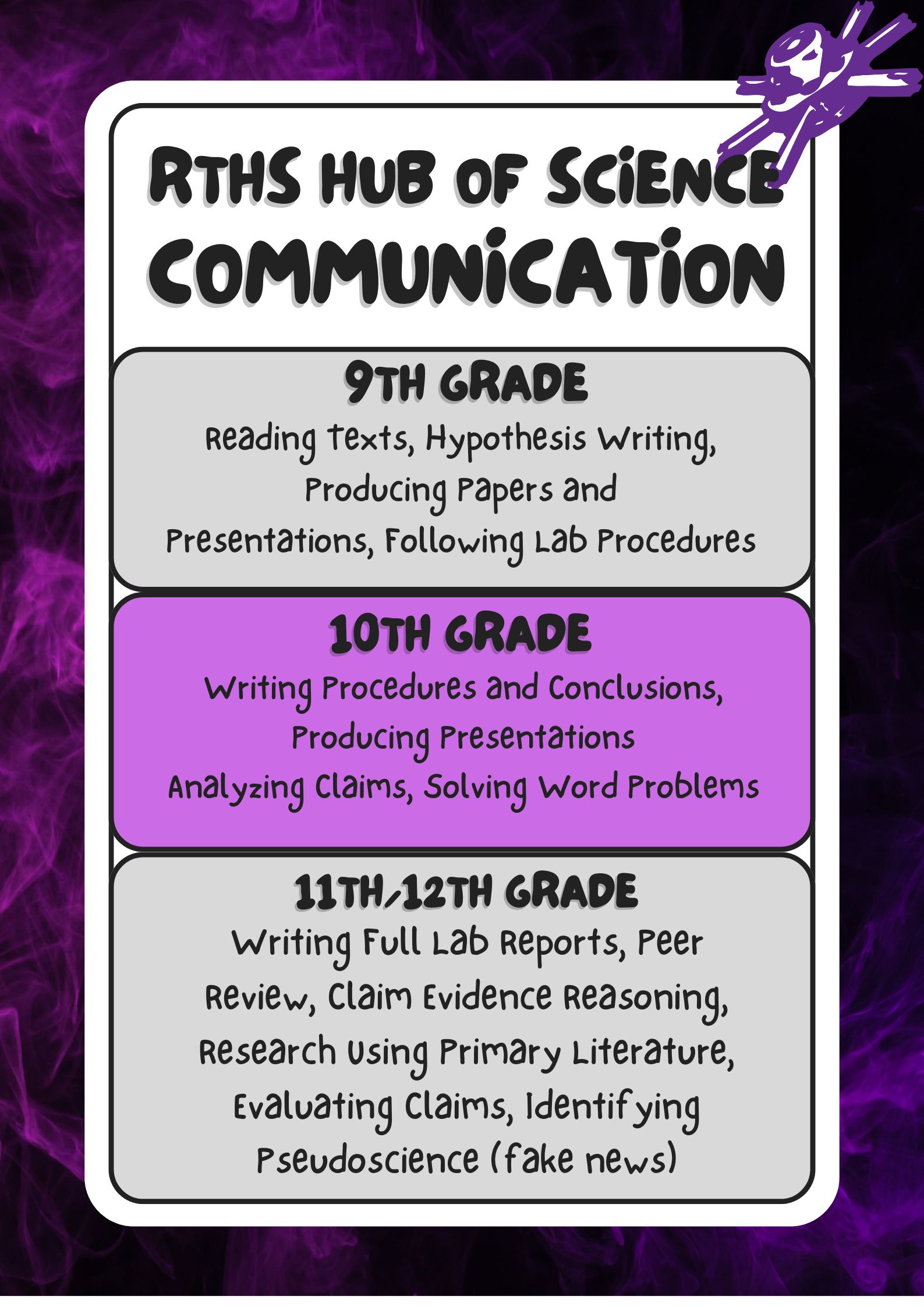
The classroom posters introduce the skill progressions in student language. The website adds short explanations and links each poster to rubrics and PLC tools.
Scientific Measurement
Students choose appropriate tools and units, estimate before measuring, convert units when needed, and report data with attention to accuracy and precision.
Data Analysis
Students collect and organize data, identify variables, build graphs, recognize trends, use technology, and explain what the evidence shows.
Communication in Science
Students read scientific texts, write hypotheses and procedures, support claims with evidence, present findings, and evaluate scientific information.
Grade-level progression
The expectations become more complex as students move from basic skill building toward independent analysis, communication, and critique.
Students practice the core routines of science: measuring, collecting data, organizing information, reading science text, writing hypotheses, and following lab procedures.
Students use previous skills in more complex situations. They convert units, analyze relationships, use technology, write conclusions, evaluate claims, and solve multi-step problems.
Students use advanced tools, statistics, peer review, research, CER writing, and evidence-based critique to prepare for college, careers, and informed citizenship.
ACT prep alignment
The ACT Science section is not mainly a memorization test. ACT describes it as measuring interpretation, analysis, evaluation, reasoning, and problem-solving in scientific contexts. The Hub of Science gives students repeated practice with those same habits across their science courses.
ACT Science passages often ask students to read tables, graphs, and diagrams, recognize relationships, compare data, interpolate or extrapolate, and make predictions from evidence. The Hub's Data Analysis pathway gives students practice collecting, organizing, graphing, summarizing, and interpreting data long before test day.
ACT passages commonly include measurements, units, trials, controls, variables, and experimental procedures. The Hub's Measurement pathway helps students understand what measurements mean, why units matter, how tools affect data, and how precision and accuracy shape scientific conclusions.
Students must read efficiently, identify claims, compare explanations, understand evidence, and evaluate conclusions. The Hub's Communication pathway builds science reading comprehension, Claim-Evidence-Reasoning (CER), peer critique, and the ability to distinguish reliable science from pseudoscience or misinformation.
ACT describes Science passages as commonly appearing through data representation, research summaries, and conflicting viewpoints. Those formats line up naturally with the Hub's three skills.
ACT note: Science is offered as an optional add-on in the current ACT structure, but the measured skills remain valuable for science coursework, STEM pathways, and evidence-based reading. Sources: ACT Science Test Description and ACT Reading Test Description.
What this looks like in class
These examples do not use student work samples. They show how different science courses can connect normal classroom activities to the same department-wide skill language.
Biology
A Biology investigation may ask students to collect qualitative and quantitative observations, organize data clearly, identify variables, and write a conclusion connected to evidence.
Chemistry
A Chemistry activity may focus on choosing correct units, converting measurements, using dimensional analysis, and explaining the reasoning behind a calculation.
Physics
A Physics lab may ask students to collect measurements, build a graph from obtained data, identify trends, and describe the relationship between variables.
Upper-Level Science
An advanced science course may ask students to use primary literature, critique claims, write CER responses, and distinguish reliable science from pseudoscience or misinformation.
Rubric snapshots
The full rubrics are teacher tools, so this page presents a simplified view of what growth looks like before linking to the complete scoring documents.
Growth means moving from inconsistent tool and unit use toward careful measurement, clear unit reasoning, accurate conversions, and appropriate use of technology or advanced math.
Open full measurement rubric PDFGrowth means moving from incomplete or disorganized data toward accurate collection, clear organization, meaningful graphs, trend analysis, and technology-supported interpretation.
Open full data analysis rubric PDFGrowth means moving from unclear reading, writing, or explaining toward evidence-based claims, complete lab reports, thoughtful peer feedback, and critical evaluation of sources.
Open full communication rubric PDFThe public summaries above are intentionally brief. The linked PDF rubrics provide the full scoring language teachers can use for classroom activities and PLC conversations.
Professional Learning Communities
Science courses can be very different, but every course can bring evidence about measurement, data analysis, or communication. That shared language helps department PLC meetings stay focused on student learning.
Name the course, assignment, and instructors.
Identify the domain and subskills addressed.
Use student work, rubric results, or common observations.
Plan support for struggle and extension for proficiency.
Parent and administrator FAQ
These responses are written for people who want to understand the purpose of the Hub without reading the full manual or rubrics first.
No. The Hub is a shared skill framework that supports the curriculum already taught in science courses. It helps teachers name and track common science practices across different classes.
Science content changes from course to course, but students still measure, analyze data, communicate claims, and evaluate evidence. The Hub gives the department a common language for those skills.
Teachers can use Hub rubrics to give feedback on science practices inside normal assignments, labs, projects, and assessments. The Hub helps clarify expectations; individual grading decisions remain connected to course and assignment goals.
Teachers can bring evidence from different courses and still have a productive department conversation because the evidence connects to shared skills: Scientific Measurement, Data Analysis, and Communication in Science.
The site is designed to explain the system while protecting student privacy. It uses general classroom examples and public resources instead of individual student work samples.
Living implementation note
The Hub of Science is a working department framework. As teachers use the skill progressions, rubrics, and PLC forms, the Science Department can continue refining language, examples, resources, and implementation steps based on evidence from classroom practice and PLC reflection.
Science department team
The Hub of Science is built through department collaboration. This section can introduce each science teacher, the courses they teach, and the science skills they help students develop.
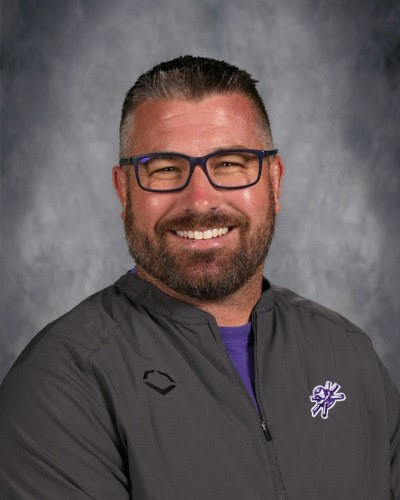
Department Chair | AP Chemistry, Honors Chemistry, Honors Physics, Physics, Natural Science
Mr. Jackson is the Science Department Chair and the primary component in bringing the Hub of Science to life. He holds a bachelor's degree in Biology and a master's degree in Teaching, and helps lead the department's shared focus on measurement, data analysis, and communication in science.
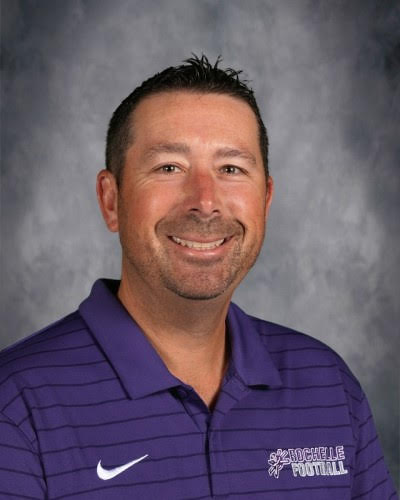
Intro to Biology, Biology
Mr. Thompson teaches Intro to Biology and Biology. He holds a bachelor's degree in Biology and a master's degree in Educational Leadership, helping students build the foundational science practices that support success across the Hub.
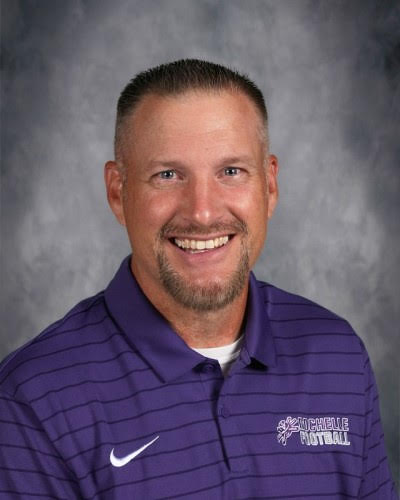
Biology, Honors Biology, Biology II, Natural Science, Applied Natural Science
Mr. Smith teaches Biology, Honors Biology, Biology II, Natural Science, and Applied Natural Science. He holds a bachelor's degree in Biology and a master's degree in Educational Leadership, helping students connect foundational science content to the practices of the Hub.
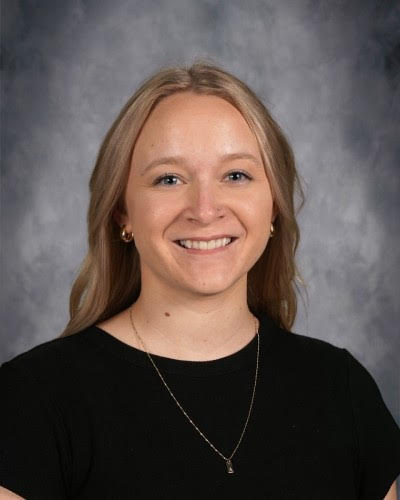
Natural Science, Chemistry
Mrs. Lodico teaches Natural Science and Chemistry. She holds a bachelor's degree in Chemistry and is currently working toward her master's degree in Chemistry, with the goal of teaching Dual Credit Chemistry and expanding advanced opportunities for students.
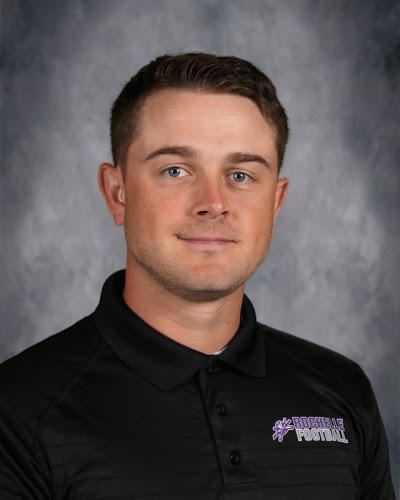
Natural Science, Applied Natural Science, Biology
Mr. Otte teaches Natural Science, Applied Natural Science, and Biology. He holds a bachelor's degree in Biology and is working toward his master's degree in Biology, with the goal of teaching Dual Credit Biology and expanding advanced science pathways for students.
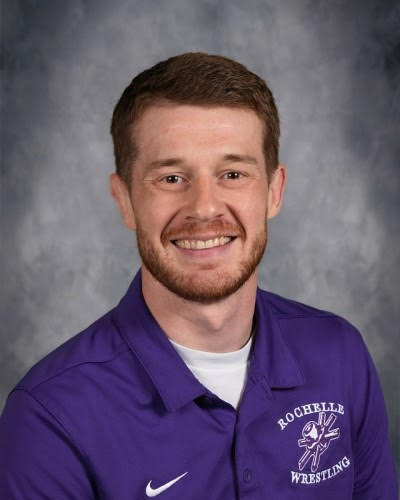
Biology, Natural Science, Environmental Science, Zoology, Human Anatomy and Physiology
Mr. Baker teaches Biology, Natural Science, Environmental Science, Zoology, and Human Anatomy and Physiology. He holds a bachelor's degree in Biology and a master's degree in Educational Leadership, helping students connect scientific content to data, measurement, and communication skills.
Teacher names, course assignments, and contact details should be confirmed with department updates and the RTHS staff directory before final publication.
What sets us apart
The RTHS Science Department stands out because it has a public, shared system for how students grow as scientists. The Hub makes skill development visible, repeatable, and useful across different classrooms.
The Hub of Science gives the department a clear identity built around Scientific Measurement, Data Analysis, and Communication in Science.
Students see the same core practices in Biology, Chemistry, Physics, Anatomy, Environmental Science, and upper-level electives.
Posters, rubrics, resource links, and the skill explorer make department expectations easy for students and families to see.
Teachers can bring student evidence from different courses into one professional conversation because the skill language is shared.
The Hub repeatedly practices interpretation, analysis, evaluation, reasoning, and problem solving in science contexts.
Teacher profiles, contact links, course snapshots, and public resources make the department approachable and transparent.
Resource library
These resources are linked as PDFs for public viewing and can be embedded or uploaded when the final Google Site is assembled.
The full overview document describing the purpose, domains, grade bands, PLC use, and rubrics.
Open manual PDFStudent-facing posters for Measurement, Data Analysis, and Communication in Science.
Measurement poster Data Analysis poster Communication posterFull teacher-facing scoring guides for each Hub skill.
Measurement rubric PDF Data Analysis rubric PDF Communication rubric PDFCommon discussion forms that help PLC teams connect activities to shared science skills.
Measurement PLC form PDF Data Analysis PLC form PDF Communication PLC form PDF